SpaceRef Weather

Weather from
Space to Earth.

Local forecasts for cities around the world, plus live solar and geomagnetic conditions from NOAA.

One clean weather portal for what is happening above our planet and what is happening where you live.

Live NOAA GOES SUVI image of the Sun

Find your local weather

Current conditions, hourly weather and extended forecasts.

Space weather now

Live NOAA measurements, explained in plain English.

🧲

Kp index

2,0 / 9
Low
What does this mean?Kp measures how disturbed Earth's magnetic field is. Values from 0 to 3 are quiet, 4 is active, and Kp 5 marks the start of a NOAA G1 geomagnetic storm. Higher Kp can push auroras farther from the poles.
💨

Solar wind

328 km/s
Slow
What is it?The solar wind is a continuous stream of charged particles from the Sun. Around 300–500 km/s is common. Above roughly 600 km/s it is fast, but speed alone does not create a storm: Bz matters too.
🧭

Magnetic field Bz

1,0 nT
Near neutral
Why does Bz matter?Bz describes the north–south direction of the magnetic field carried by the solar wind. When Bz stays negative, energy can connect more efficiently with Earth's magnetosphere and increase geomagnetic activity.
📡

Solar flux F10.7

110 sfu
Moderate activity
What does F10.7 show?This radio measurement at 10.7 cm is a useful indicator of the Sun's overall activity. Higher values usually mean a more active Sun, but F10.7 does not predict a specific flare by itself.
🌌

Aurora potential

Low to moderate
Simple Kp interpretation
What does this mean?At low Kp, auroras usually remain near polar regions. As Kp rises, the auroral oval expands and auroras may become visible farther south. This card is a simple interpretation, not a separate NOAA measurement.

Live measurements

Recent NOAA data trends.

Kp index — latest measurements

Now: 2,0
9.00.0
How to read it: rising Kp means Earth's magnetic field is becoming more disturbed. The easiest threshold to remember is Kp 5, the beginning of a NOAA G1 geomagnetic storm.

Solar wind speed — 24 h

Now: 328 km/s
415.2349.8
How to read it: a faster wind can carry more energy, but it becomes much more important when density rises or Bz turns negative.

Magnetic field Bz — 24 h

Now: 1,0 nT
3.7-4.4
Watch the zero line: prolonged negative Bz gives the solar wind a better magnetic connection to Earth and can intensify a geomagnetic response.

How the indicators work together

Simple guide
☀️ → 💨 → 🧲 → 🌍

Fast solar wind + negative Bz + rising Kp tells a much more useful story than any one number alone.

In short: solar wind and Bz describe what is arriving from the Sun; Kp shows how Earth is reacting.

3-day space weather outlook

NOAA geomagnetic forecast.

UTC dayForecast max KpSimple reading
2026-09-061,7Quiet
2026-09-073,7Low
2026-09-082,3Low

This table shows the highest predicted Kp for each day. Space weather can change quickly as new solar wind structures approach Earth.

Live Sun & aurora images

Operational NOAA imagery, updated automatically.
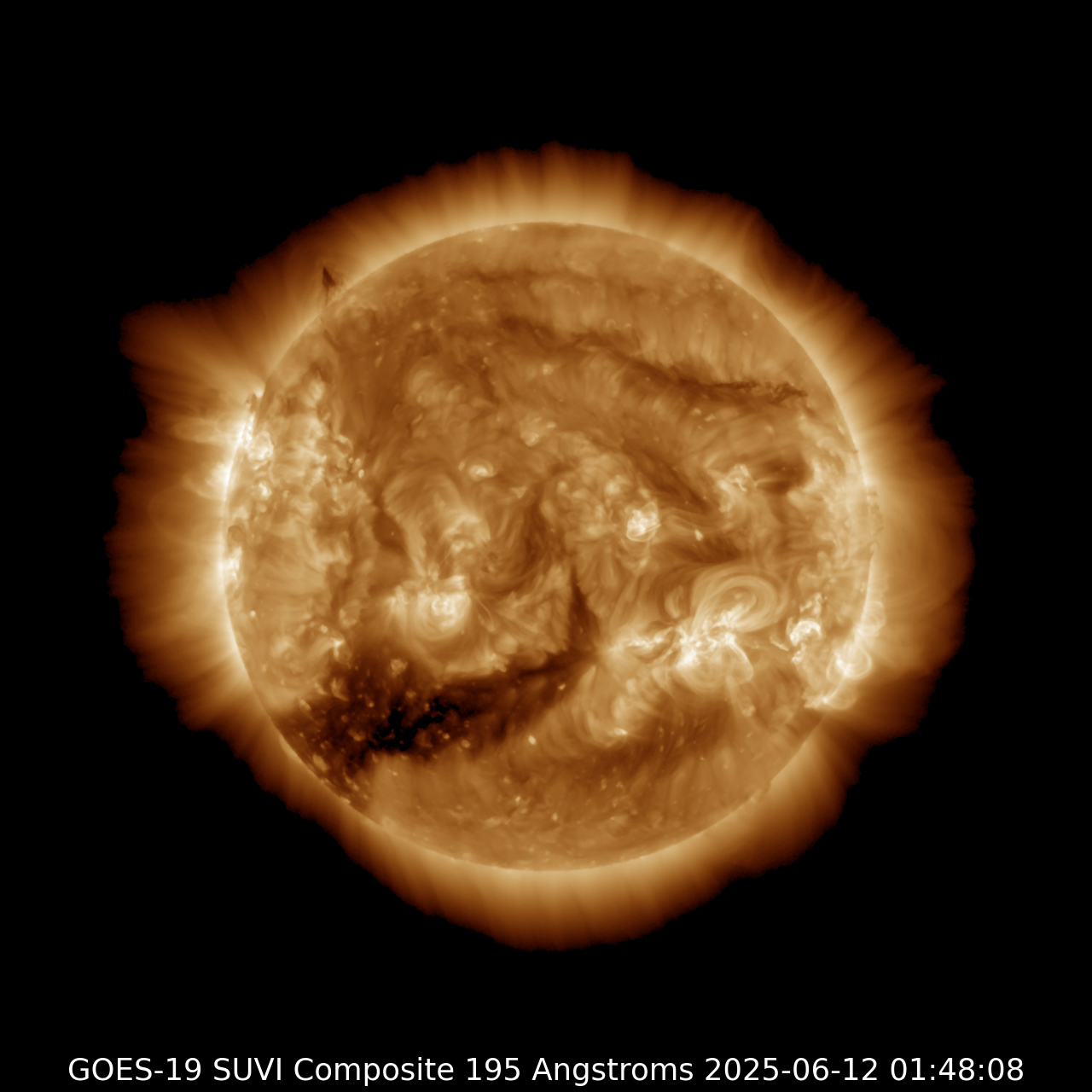
NOAA GOES SUVI Sun 195 Angstrom
Sun — 195 ÅExtreme ultraviolet view of the solar corona.
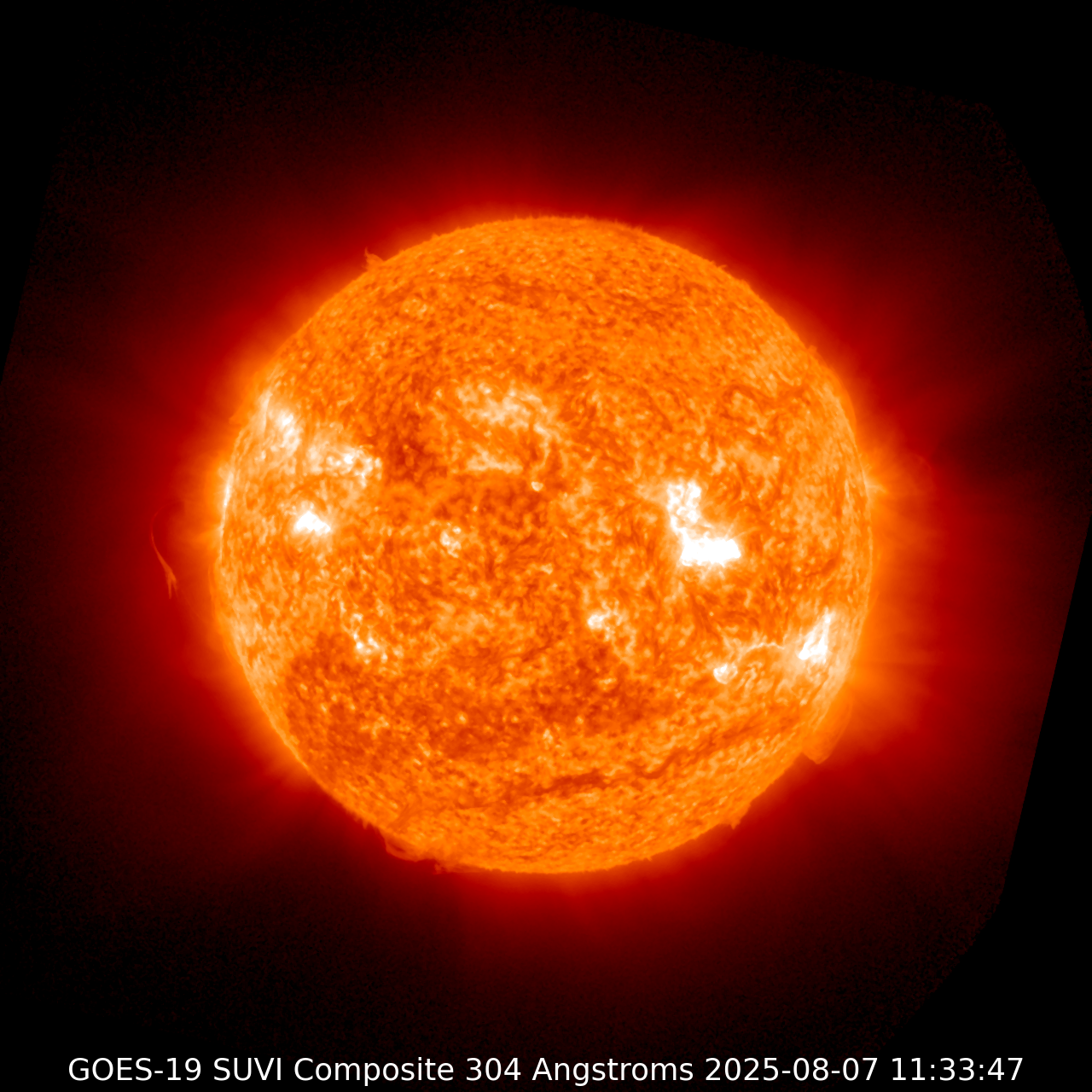
NOAA GOES SUVI Sun 304 Angstrom
Sun — 304 ÅHighlights chromospheric structures and prominences.
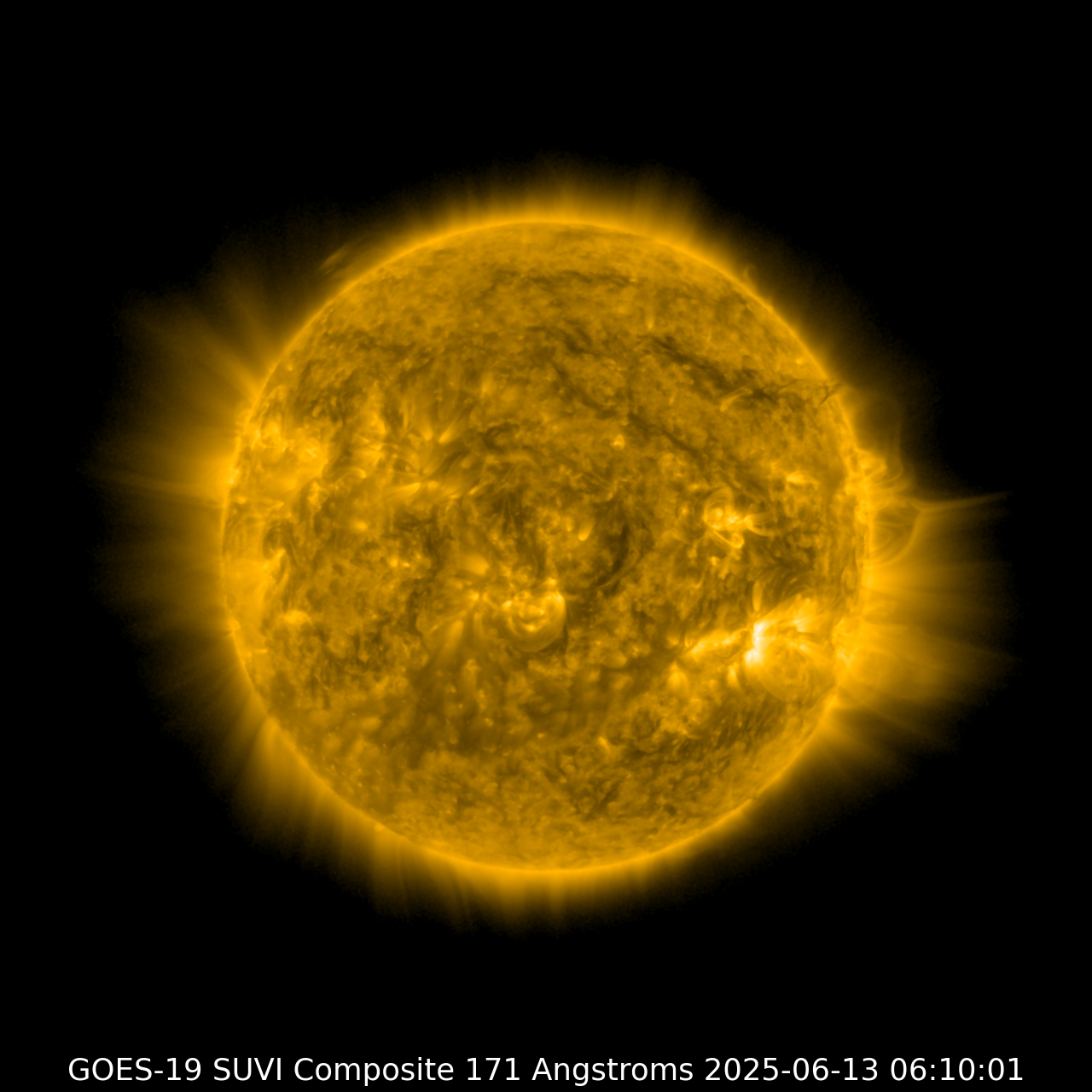
NOAA GOES SUVI Sun 171 Angstrom
Sun — 171 ÅShows fine structures in the solar corona.
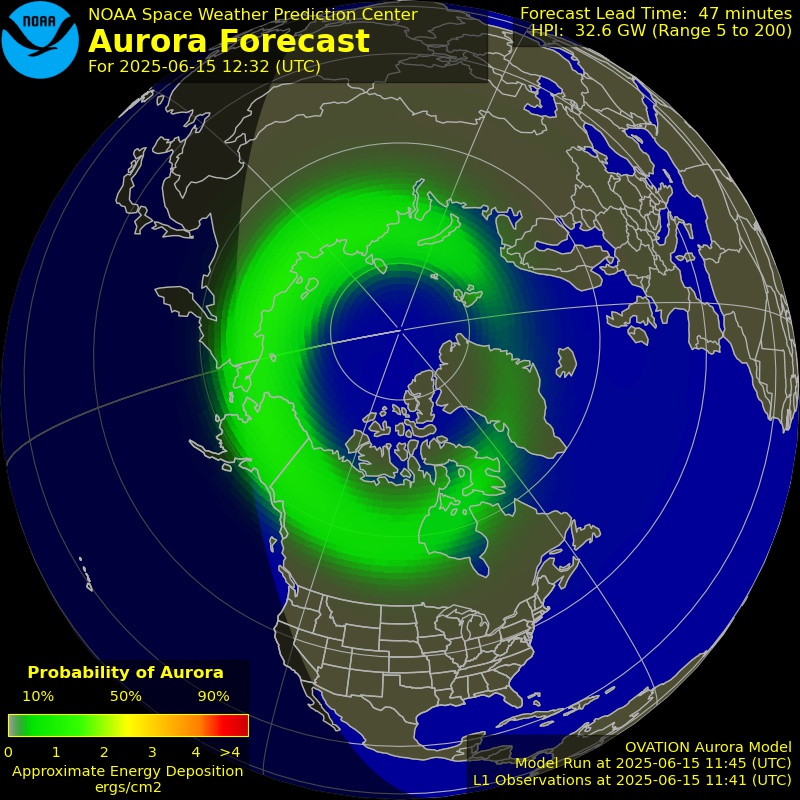
NOAA OVATION aurora forecast
Aurora — Northern HemisphereNOAA OVATION auroral activity model.

Space weather, without the jargon

Start with Kp. It tells you whether Earth's magnetic field is quiet or disturbed.

Then check solar wind speed. A sudden acceleration can signal an energetic solar-wind structure arriving.

Finally look at Bz. A sustained negative Bz makes it easier for solar-wind energy to enter Earth's magnetic environment.

F10.7 is the bigger-picture indicator. It tells you how active the Sun is overall, but it is not a storm forecast by itself.

The ultra-simple rule
  1. Kp rises: Earth is reacting.
  2. Solar wind speeds up: more energy is arriving.
  3. Bz turns strongly negative: the connection becomes favorable.
  4. All three together: pay attention.